The Atlantic is a stormy moat (deep, wide ditch filled with water dug round a castle etc., as a defense), and the Mediterranean is the blue pool in the old garden (part of the Atlantic) has taken the sacrifice of ships and blood for more than five thousand years.
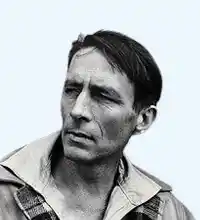
“Cruelty is a part of nature, at least of human nature, but it is the one thing that seems unnatural to us.” ― Robinson Jeffers (1887-1962)
This blue pool shines in the sun. But here is the pacific the ships, planes, wars are perfectly irrelevant. Neither our present blood-feud (quarrel) with the brave dwarfs (Hitler and his Nazi soldier or Japanese soldiers) nor any future world-quarrel of Western and Eastern man, the bloody migrations, greed of power, battle-falcons are a mote (speck, small particle) of dust in the great scale-pan of the Pacific ocean. Here from this mountain shore, headland beyond the stormy headland plunging like dolphins through the grey sea-smoke into pale sea, look west at the hill of water (looking out westward across the immensity of the Pacific Ocean). It is half the planet, this dome, and this half-globe, this bulging eyeball of water, arched over to Asia, Australia and white Antarctica. Those are the eyelids that never close. This is the staring unsleeping eye of the earth, and what it watches is not our wars.
Initially, the poem is a bit complex one. The situation of the speaker is that he is standing high up on a mountainous shore. He is looking out westward across the vast Pacific Ocean. Most possibly he is somewhere in America. And from this place, he is thinking through his mind’s eye of the ships and airplanes that signify war.
This is an intellectually stimulating poem about war on the mind of its beholder, who looks at the future of humanity with the sense of uncertainty.
The poem begins with the quick passing details of the strife-filled history of the other oceans. The Atlantic is not only “stormy”. It is long and clearly defined between parallel lines like a “moat”, the military defensive fortification. Only America seems to be not so much affected by the ravages of war. The greed of power lurks in Europe, and America is protected by the oceans. Superficially the Mediterranean is beautiful-looking – “the blue pool in the old garden”. But its history is quite different. For the last five thousand years, it (the Mediterranean) stretches back like a savage, inhuman God, on the sacrifices of ships, men, and blood. It has “drunk sacrifices”. It has participated in the bloodiest of the battles humanity has ever known. Now in the modern world, the Pacific Ocean is witnessing the bloody war. There is, however difference between the wars of the present and the past. In the past, wars had limited scope, but, in the present time, wars create havoc (destruction) world-wide. The expanse of the war is far and wide. In every casual way the poet, documents the kind of war modern man involves in: ships, warheads and “planes”. Such wars are perfectly irrelevant. This shows the attitude of the poet towards the war. He speaks with some hatred about the human warfare which is taking place in the pacific area. The speaker maintains a detached perspective, even though he seems to be related to the American landscape. He reflects upon the present war, which is bloody and is waged against the Japanese or Asian soldiers (“dwarfs”). He sees a kind of mess. People are “Westering” and Eastering”. The war is fought not on any significant issue, ideological or the like, but merely for “greed of power.” It is among the “bloody migrations” and “battle-falcons”. The drunkenness and lust for power are everywhere. In essence, the war as it exists is a minor, irritating phenomenon, stupid and vicious, and only of momentary importance.
From the tenth line onward, the poet’s mind turns towards the sheer immensity of the vast expanses. The poet does not see the landscape as a vast flat area. The Earth’s surface is curved-like. The poet uses metaphors to express this idea. The Pacific is presented as a “hill of water”; a “dome”, a “half-globe” and, finally “a bulging eyeball of water.” This is a magnificent comparison between the human eye and the Pacific Ocean in shape, in the wateriness, in the division between the outward and inward parts of the eye compared to the watery expanses of the Pacific Ocean contrasted to the landed half of the globe containing Asia and Europe. He glances on the farther side of the eyeball like ocean the continents: Asia, Australia, and Antarctica, which represent for him “the eye-lids which never close”. The never-closing eyelids imply the drifting apart (separateness) of the continents involved in war.
We saw that the poem establishes the metaphor of the Pacific as the eye of the Earth. The earth now becomes a sentient, intelligent, watchful being, looking out in the vastness, unknowable and uncertain future. War is thus an irrelevant thing for him. The poem does not bring death- toll from the war front; neither do we see in the lines the bloodshed, death, human- skeletons like melodramatic happenings. The poem is more intellectual than passionate. It is reflective in mood. The poem shows us the phenomena of human warfare against the background of the whole universe. This gives the impressions that war does not belong to the eternal order of things: it is simply a foolish invention of mankind.
The language of the poem is sparse (thin and scattered) and economic. The simile like “the plunging dolphins” makes a useful contribution to rhythmic seascape. “Eyeball” is the metaphor in “Eyeball of water…” and the poet’s eye matches perfectly with the eye of the sea looking back and forth of human strife and its destiny. The poem is both imaginative and intellectual. The intellectualization has not marred its poetic beauty.
Critical Analysis
The Atlantic, the Mediterranean, and the Pacific are the oceans and the sea which are allusions that invite us to consider the situation of the poem. “The Eye”, the oceans and the wars that have been mentioned here and the poet draws a line of relation between them. Where is the speaker, in fact? There are some hints by which we can determine his position like: but here the pacific, here from this mountain, into pale sea, looks west at the hill of water.
From the above lines, it is obvious that the speaker is standing high up on a mountainous shore, looking out westwards across the immensity of the Pacific Ocean. Therefore, he is somewhere in America. Ships and airplanes signify war, but their presence is merely an assumption, an imaginary thought. “The Atlantic is a stormy moat”, and “the Mediterranean/The blue pool in the old garden/More than five thousand years has drunk sacrifice/Of ships and blood and shines in the sun…” From these statements, we can learn the facts that the Mediterranean is the part of the ocean that has experienced several wars. Many sacrifices have been received. It shines in the sun. These are only parts of the speaker’s meditation, which have been attempted to compare with the Pacific Ocean, for which the wars and the blood feuds are irrelevant. They are like “a mote of dust the great scale-pan.” “The great, scale-pan,”‘ a metaphor from weighing, trading and evaluating, is a direct reminder of the Last Judgment, the time when perhaps like Belshazzar in the Book of Daniel, we shall be “weighed in the balances and found wanting.” “The great scale-pan” may have been also referred to the sea in which the wars and the blood-feud are like “a mote of dust,” very insignificant in the speaker’s view.
The speaker speaks with contempt for the warfare taking place in the Pacific area. He seems to be an American, or at least American-based. “Dwarfs” refers possibly to the Japanese or Asian soldiers. Similarly, by “westering or eastering man”, he refers to the landed half of the globe — Asia and Europe, and their wars. During the development of the poem, we read a series of metaphors in which the Pacific is considered as “a hill of water,” a “dome,” a “hall-globe,” and by a final, more imaginative act of comparison, “a bulging eyeball of water.” The comparison is apt in several ways: in shape, in the wateriness, in the division between the outward and the inward parts of the eye, comparable to the watery expanses of the Pacific Ocean contrasted to the landed half of the globe containing Asia and Europe. On the far side of eyeball-like ocean are Asia, Australia and Antarctica which, according to his comparison, represent “the eye-lids which never close” — because they are too far apart!
Though it is a ‘war poem,’ the war has not been commented with the painting of heart-rending pictures of suffering and death, destruction and agony, nor with the details of the human heroism, skill, or miracles. It describes rather the phenomena of human warfare against the background of the whole universe. War is rather a foolish act or invention of human beings.
The language of the poem is sparse and economical, but the poem’s quality has been enriched by the use of metaphors, symbols and rhythm. For example, the ‘Eyeball’ is a metaphor for the Mediterranean. “Eastering’ and “westering” are symbolic meanings for Asia and Europe. Rhythmic effect can be realized in tenth and eleventh lines. Besides, this poem is highly intellectual poem, pretentiously philosophical, and over-derivative from other well-known poems in the English language.