The poem is a brilliant and sympathetic rendering of the poet’s feeling on the fate of the Fulani cattle. The context is African. The poet feels agony in his heart when he finds himself face to face with the dead cattle. The whole poem is about poet’s sympathy on the animal’s death – the pathos roused by man’s inhumanity upon the innocent cattle.
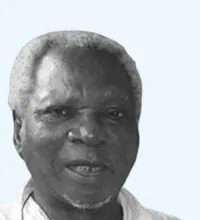
“The casualties are not only those who are dead. They are well out of it.” ― John Pepper Clark (1935-2020)
The natural death of the cattle is somehow satisfactory and consoling as against the brutality of man upon animals. The intention is to condemn man’s inhuman and cruel nature. Now let’s see how the poem develops through paraphrasing
I have a sense of regret Contrition winds me round like a snake. I coil round because I feel that I have done something wrong. This happens more so when I come to watch the dead body of your clan. There develops deep agony in me. I see in your face the whole mystery. I reflect upon your death in the slaughterhouse. Once you are suitable you are taken for butchery. But I see in your hump (back) some secret hope and knowledge. You are courageous. You are silent, mute and pale-looking (wan). You are totally innocent of the fact that you are taken to the slaughterhouse for killing (butchery). This forces me to reflect on the question – Is it for the shopping of your twisted and crooked horn that you are taken in the slaughterhouse? But the passions in you are far stronger than the storms which pass through Niger republic. With your death you are free from all such trammels. Now no drover’s whip will come to strike on your balding back and crest. The “shocks of ecstasy’ are all over now. With your death the trouble of life is also over. The drunken journey from the desert, through the grass and forest, to the “hungry” towns is now not necessary. “Hungry towns”, a metaphor, speaks of the hungry people for the meat of the Fulani cattle. Now you are at rest. Your tail is patient but, the “long knife” is still required to feed the townsmen by the sea.
The speaker in the poem can be a slaughter man himself. He realizes the crime committed by him. So there is contrition in him. But the fate of the Fulani cattle is the same whether it dies a natural death or dies in the slaughter house. Despite the neat observation and evocation of pain and agony at the fate of the cattle, the speaker comes to terms with his action. The poem has, though irregular, good rhyme scheme. He poses some serious questions about what he observes. Questions are part of the rhetorical structure of the poem.
Critical Analysis
This is a poem expressing compassion (pity) towards a herd of cattle (cows) resting near a town before being taken to the slaughterhouse (where animals are killed by the butcher). The situation of this monologue by an inquisitive passer-by is easy to understand.
The poem however begins with a statement by the speaker that makes us feel that he has been thinking upon this issue not only for a moment this time, but also for a long time, as suggested by: “Each time I come upon the wake of your clan”.
There is no concrete, outward development in terms of action in the poem. Only some time elapses as the speaker asks a series of questions to the mute animals. He asks them a list of questions because they don’t answer him and he thinks of alternative answers to his own question as to why the animals are not expressing their emotions or revolting against the cruel drover (person who drives the animals from one place to another). The poem develops with further questions, expressing the sense of wonder, curiosity and pity of the speaker. Indirectly, the poet intends to express his sympathy towards animals and satirize the cruelty of the so called superior animals (human beings) towards the innocent animals.
The intention of the poet is simple to understand: he has presented a compassionate persona whose questioning of the animals is supposed to provoke our own thoughts, imagination and sympathy. We feel the sense of guilt that he feels; we realize the man’s cruelty to animals; we wonder whether and what kinds of feelings, animals have and why they do not revolt; and we are aroused to ask many other questions of our own.
The choice of words in this poem suggests that the poem was written in a different culture where the idioms are neither like those of the English or any other language. The poem is probably translated from the Nigerian language. The word-choice also reveals that the speaker identifies himself with the suffering animals to some extent. It is notable that the choice of words perfectly matches the theme of serious pondering and the expression of a deep sympathy. The very first line is a good example of all these features of word-choice. Contrition or the sense of guilt makes the poet feel very bad. He expresses this in a local idiom as “Contrition twines me like a snake”. He feels sorry because human beings have tortured animals for centuries; and though he is one of them he is unable to do anything. He feels guilty every time he becomes conscious of this fact, that is, when he comes “upon the wake of your clan”. The mention of ‘clan’ brings ideas of racial torture in our minds.
The choice of words that this speaker makes has created many unique images. The Fulani cattle have come down the hills and across the desert moving up and down and in curving paths. This is described as “undulating along in agony”. Though rather abstract, this is very suggestive. The face of the animal to which the man is speaking is described as a “stool for mystery”. It is actually difficult to know the emotions of animals. But that makes him think and sympathize even more. He thinks that the animals’ knowledge and hopes are “locked in your hump away from man”. Though this suggests that he is ignorant of the scientific facts about the location of feelings, we also have a feeling that he is using traditional wisdom and beliefs. The animals are, however visibly ‘pale’. But he wonders what gives them the courage to tirelessly walk on and on, and not revolt. They ought to kick man’s face! Further images are developed in his attempt to find an answer to the question why the animals are silent. The word choice also reveals that the questions are more rhetorical than straightforward.
Certain words reveal that the speaker is either an uneducated and ignorant man, or else he is using traditional ideas and ‘folk wisdom’ rather than scientific knowledge. For instance, he guesses that the cattle may be carrying their long experiences of suffering in their horns. He also guesses that the cattle might be hiding some knowledge and hopes in their ‘humps’, or back. Many other words also suggest that the speaker has different and rather odd ideas about cattle. He says that a moment without the beating on their backs may be arousing “shocks of ecstasy”. It is odd that relief shocks them with ‘ecstasy’, or extreme pleasure, as he believes. He also believes that the long knife will prevail over the innocent, which we may believe.
The logical structure of this poem may be said to be one of associative thought process. The speaker thinks of alternative answers to key questions as to why the animals are not expressing their feelings and the sense of rebellion. But during the process we are also told many more things about the plight of the animals. We learn that they have been driven to this city from faraway places across the desert and forests. Our sympathy is aroused when the speaker reveals that these animals are being brought to the “hungry towns by the sea”.
There are no traditional European types of figures (metaphors, irony and allusions) in the poem. Yet the images created by the poet in the course of the meditation are striking and deeply meaningful, as discussed above. The mention of “clan” suggests that the poet may be identified with the animals, most probably because he also belongs to a clan which has been oppressed for a long time. The mention of Niger is another clue which tells us that the poem is African, if not precisely Nigerian, where there is a long history of domination and discrimination the Negroes.
I found the poem particularly interesting because of its simplicity. The speaker of the poem seems to be a simpleton, but he is much better than the common run of heartless people who never understand that animals also have life and feelings, and that they must be loved to prove our so-called “superiority” over them.
Literary Analysis
The speaker himself says in the second line that he is often at a distance as an observer while the ‘clan’, or ‘group’ or ‘herd’, is passing by him, ‘undulating along in agony.’ This observation leads him to deep meditation; He contemplates on ‘agony,’ ‘mystery’, ‘secret hope or knowledge,’ patience, and other characteristics of the cattle, which are going to ‘the hungry towns by the sea’ to the house of slaughter’.
The speaker’s meditation is entirely concentrated on the cattle. This is the situation that we find in the poem. The development of the poem is in a series of questions.-
// What….. Slaughter?
// Can it …. the Niger ?
// But will…… your tail ?
However, before discussing about the development, it is necessary to determine what are the cattle referred by the poet. The cattle are ‘mute,”fierce,’ and ‘wan’. They have ‘gnarled’ and ‘crooked’ horn. They can be goats, deer, sheep and such other animals that become food of carnivores (none-vegetarian). These animals ate cry gentle and also patient, but yet goats and sheep ate more possible than deer because sometimes they look very fierce. We can argue further arising a question – Isn’t it possible that the poet refers to buffaloes (or cows and oxen for ‘western people)? There is much possibility of this fact because the poem says –
Perhaps the drover’s whip no more
On your balding hind and crest
and it is known fact that buffaloes, cows, oxen and such animals become food in large quantity for the people, especially For white hungry people of the towns by the sea. They do have ‘gnarled, and crooked horn.” Anyway, we can take the above examples as the reference of the cattle.
After understanding the intended meaning of the cattle, we can again go back to observe the development of the poem. First of all, we must consider the situation that the speaker believes that the condition of the cattle is pathetic, as he says –
You (the cattle) go 10 the house of slaughter
The cattle are killed for meat. They supply a large quantity of food to the people, though two kinds of people are found with contrastive view— one favoring that they must be killed for food and other protesting that, like other living things, the cattle also should be preserved. Their living rights should be honored. Unfortunately, it does not happen. They experience passions— pain, tortures, emotional griefs, merciless murder far stronger than storms which brim up the Niger. What a comparison. ! The life of cattle has been compared with the life of the Niger, or the Negroes. This sense of apartheid gives a hint that the speaker is possibly an American and he knows much about the Negroes’ suffering. It is also possible that he is himself a Negro. Rather the Negroes are making severe Protest for their rights. They are struggling to rescue themselves from the inhumane cruelty of the mankind. The bitter experience of the cattle, and also partially the experiences of the cruelty of the mankind, is the basic theme of the poem. Being a man, he feels repentance.
Contrition twines me like a snake
He finds on the cattle’s face a mystery that, in spite of sufferings and tortures, he goes to the house of slaughter, without ‘demurring and -kicking’. The speaker wonders at the patience of the cattle. He (the ‘cattle) experiences, passions far stronger than storms which brim up the Niger. He receives the drover’s whip on ‘balding hind and crest” (having little or no hair on the scalp, back and side of the body). He makes the “drunken journey (tired journey) from the desert, through ‘grass and forest, to the hungry towns by the sea. Ironically, it is also a part of his patience, and so a pail of the mystery. At the sight of a long knife, even his tail shows patience. In fact, this patience is simply the result of innocence of the cattle.
It is also interesting to note that the second person pronoun (you, your) has-been used in this poem to stand the cattle at the position of human beings. The poem contains the lines with variable number of syllables. Some of the lines have rhymes, for example: snake/wake, prevail/tail etc. that come regularly in pair, but most of the lines have rhymes alternately. ‘Clan’ of the third line rhymes with ‘man’ of the seventh live. Some lines have a beautiful rhythmic pattern, as well; for example, in the beginning pair –
Contrition twines me/like a snake
Each time I come/upon the wake