Ode to Evening is one of the finest poems of Collins in his collection ‘Odes on Several Descriptive and Allegorical Subjects’. It is composed in a single stanza of fifty two lines with unrhyming pattern. This beautiful poem is addressed to the evening who is regarded as the goddess, nymph or maid. The personified evening is chaste, reserved and meek opposite to the characteristics of the bright sun.
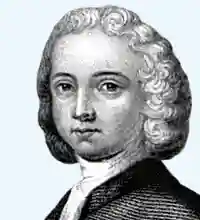
“Words like feminism or democracy scare me. They are words with barnacles on them, and you can’t see what’s underneath.” ― William Collins (1721-1759)
This poem has mainly three parts; the first one is the opening salutation to the evening, the second one is the center where the poet requests for the guidance in receiving peace, and the last one is his personal point of view to return to the general aspect.
When the poem commences, the speaker humbly requests to the spirit of Evening to grant him the skill of singing so that he could please her. She is an enchanting part of nature who sometimes looks like in a pensive mood. She is also fond of the speaker’s song. The fascinating nymphs in the evening that come from the buds of flowers bring fragrance in the peaceful evening environment. To make the environment more soothing, the speaker’s song should be very soft like that of the murmur of the streams.
The only sound that the speaker listens is that of the cry of the bat and the beetle. He aspires to go to the ruined building in some lonely valley to watch the beauty of the evening, but he is disturbed by the rain and the wind. So, he decides to visit the mountainside to see the descending evening. In the end, the speaker admits that the charm of the evening should continue to bring peace and harmony and to inspire friendship, poets, science and lovers of the peace.
The application of the femininity in describing the evening and characterizing her is one of the strengths of Collins. Words and phrases like ‘chaste Eve’, ‘fancy’, ‘rose-lipped’, ‘nymph reserved’, and ‘maid composed’ are some of the illustrations of the use of the femininity in the poem. These traits to the evening adds the concept of an eye-catching woman who is reserved and patient.
The poet has used the concept of the evening as a way to put his view on the woman as contradictory figure, something mysterious and also generous. The evening is merging point of the sunlight and the sunset, in a way, it is a transition from light to dark, day to night. Depicting the negative side of the evening, the poet says, it symbolically hides all the faces of the daytime whether good or bad. In its darkness, everything is same and mysterious. It is the eve that makes sure that the next day is certainly going to be bright and sunny. In that sense, evening is the seed of the hope and life of the next day.

Collins personifies evening in this poem as ‘chaste Eve’ which is a Biblical allusion to Eve. The comparison of the evening to the Biblical Eve is ambiguous. If the fallen and flawed state of Eve is associated to the evening, then the evening becomes something negative and cursed state of the day when the bright light of the sun is missed and set. But, if the poet is comparing evening with the innocence and purity of Eve, then the evening means a beautiful time of the day when everything comes to the resting point with peace and harmony all around. The intention of the poet is still ambiguous.