Citizens of the polished or fashionable capital sigh for the sub-urban pits or villages and their innocent simplicity. The people of the sub-urban parts appreciate the unpolished (unfashionable) innocence of the distant villages. Dwellers in the distant villages speak of a simple, unspoilt girl, living alone, deep in the bush. Deep in the bush we found her.
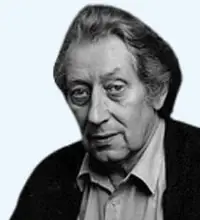
“All I asked for was equality and independence. A rotating chairmanship might have been the answer.” ― Dennis Joseph Enright (1920-2002)
She had large and innocent eyes. She lived among gentle gibbons (long armed ape of South East Asia) and mountain ferns (type of flowerless plant with feathery green leaves). She was perfect for the part of the country except for the dropsy (disease in which watery fluid collects in the body) which comes from polished rice imported from the polished capital. In the capital, our film is much admired for its gentle gibbons and mountain ferns, and for the; unspoilt, unpolished, large and innocent eye or the girl.
The poem “A Polished Performance” is about the performance of ‘art’ itself — whether that is a romantic poem eulogizing (praising) the beauty and purity of the rural life or a dramatized version of a film. The poem is satiric to some extent, but it embodies many different levels of meaning. “Polished” is the central word of the poem giving it an ironic context of meaning. The poem begins with a reference to the “citizens of the polished capital. They are the modern people of the large, sophisticated, modernized or commercialized city. They sigh for the towns up country. They long for the simple touch of life in the village, and for its innocence and simplicity.
Still more, there is the same unfulfilled wish of the people wherever one goes. The people of the towns up-country, they praise the unpolished innocence, simplicity of manner and living in the distant villages.
If one visits such distant villages, the villagers there, in the same way, speak of a simple and unspoilt girl living alone at the heart of the jungle.
Now the perspective of the poem changes. A shift from the present time to the narrative past is what is seen here. Now the speaker and other friends “found” her “deep in the bush”. The girl had “large and innocent eyes. She was among the gentle apes and mountain plants.
The girl was perfect “for the part.” We now understand that the speaker is one of the filmmakers who have long tried to find a girl for the innocent role of the film. The girl was “perfect” for the role of the documentary version of the film. Yet the girl was suffering from “dropsy”, the abnormal swelling of the limbs and the body. She suffered from this deficiency disease because of the “polished rice” she ate. Here, the poem makes the-point that human beings are dissatisfied with their living conditions. The people wish to go ‘elsewhere or ‘somewhere’ for better living or better tomorrow. But, the search of the ideal is never fulfilled. Ideal is the thing of the mind. In the real life situation there are defects in one form or the other.
The speaker asserts in the last stanza that their film was much admired in the capital. People liked the way the gentle apes (gibbons) and mountain plants (ferns) were pictured. They also praised the girl who they thought was unspoilt, unpolished, large and of innocent eyes. Again, the poem makes another point that purity and innocence are the things very much aspired in life. But in art the seamy side (here the dropsy deformity) is often hidden. Only the carefully framed polished things are projected. Life is not always polished and joyous. Art here hides the reality and gives simply an illusion of the ideal life. Briefly, the poem makes such points:
- Human beings are never satisfied: they always wish themselves in circumstances which they hope will be better than the ones they are actually in.
- The life in the polished capital is rather an unhappy one. The people here have the experience of the emptiness of the excitement and pleasure of the affluent city. So they wish something uncomplicated and simpler. Thus the poem is ‘written from the perspective of the city dwellers.
- The ideal type of beauty is very hard to find. The ugly aspects are too often hidden and the beautiful surface is projected in the film version.
- Simple, unspoilt existence has its cost. No doubt the girl lives an unsophisticated unpolished existence. Yet she suffers from the disease related to poverty, restricted living condition, unvaried diet, and ignorance. Her disease comes from the “polished” diet.
- The poem also makes the contrast between the different ways and standards of city life and rural life.
The poem is cast in an ironic way. It makes a commentary that the so-called unspoilt, natural life has its own cost and dangers. The poem does not employ so much of figures of speech. It works through bare statements Ironic device is soon caught. The economy and controlled expression match perfectly with the kind of idea it presents. The poem develops logically and the poet shows to us the defects of the polished performance of the sort he talks in the poem.
Critical Analysis
The poem ‘A Polished Performance’, is an apparently simple, but a deeply meaningful poem that conveys the message that human beings like to believe in false impressions and knowledge about other places, people and times than their own.
In particular, there is a satire of the modern ‘business’ of showing the extreme of beauty or ugliness; and there is also the general message that every human being lives in and desires for the illusion that life is perfect and blissful somewhere else! The filmmakers, the newsmen and the general people, especially in the city, are involved in giving and receiving the illusion of partial and distorted truths; but that is also the weakness of human beings in general. The meanings of the poem are, however, rather implied, and only embedded into the situation and incidents.
The speaker of the poem is one of the film crew that sets out to search for an ideal and perfect actress who should in real life be naturally beautiful and perfect. This search of course takes them out of their ‘imperfect and unhappy city’; but as they go to the village where they had thought there would be perfect beauty and happiness, the villagers tell them to go even further away to the remote hills where they would find a perfectly beautiful and happy heroine to give them the perfect performance. They go there and find the girl, among the gibbons (a kind of chimpanzee) and the Rocky Mountains, but she is suffering from a disease caused by the deficiency of good food. They come back to the city and make a beautiful film, but by excluding the girl and the film sell well, and become admired for the “unspoilt, unpolished, large and innocent eye”.
The ‘situation in the poem is more complex than those we have already examined, and the title does not at first give a very clear indication of what we are to expect. The poem is exceptionally simple in its elements, but does not fit into any of the more familiar patterns of English poetry, and, therefore, calls for careful consideration. We need to read it over several times, pondering how the different details on the situation are presented to us or referred to, looking for a clue which shows how the whole poem fits together. The poem opens with a reference to the ‘citizens of the polished capital’, which suggests the inhabitants of the large, sophisticated, modernized, commercialized city, who ‘sigh’ or long for, or wish themselves to be back in some of the ‘towns up-country’, more modest places where (they like to think) life is less difficult, freer from the complications and frustrations connected with such things perhaps as housing, unemployment, cost of living, and conflicting moral standards.
In the second stanza we are reminded that even in the ‘towns up-country’ the people are by no means satisfied with the conditions of their existence, and tend to think with admiration and envy of the simple, ‘unpolished’, the innocence of the village people who live, free from the strains of modern life, still further from the polished capital. Yet, in stanza three, if we journey to the distant villages, we find that the people there do not think of their condition as in any way perfect or enviable, and tell us that if we want to find a simple, unspoilt girl we should look for her right away from the village, ‘deep in the bush’. We notice two things about the way the poem has developed so far. It is obviously based to some extent on the idea that human beings are never satisfied: they always wish themselves in circumstances which they hope will be better than the ones they are actually in. If by some chance they find themselves moved into these other circumstances, they soon realize that they are not fully satisfied with these either, and begin to imagine again some other set of circumstances which is really what they want — and so the process of wishful-thinking’, with which we are all familiar, can go on. Of course, the process of wishful thinking also operates in the reverse direction: the rural farmer (or his son) thinks he will be better off in the town, and the townsman joins in the mad rush to the capital city — often, of course, to be severely disillusioned. Our present poem, however, is written from the point of view of the ‘citizen of the polished capital’ who, having experienced the emptiness of the excitement and pleasure of the affluent city begins to long for something simpler.
The second -thing we notice as we read through the first three stanzas is a gradual transition from the general to the particular. The first two stanzas seem to be presenting the general tendency of people who wish to be somewhere other than where they are; but in stanza three, we observe the suggestion of a search for a particular individual – a girl who is simple, unspoilt, representing perhaps the ideal type that the nation, or the race, can produce. This development of thought becomes clearer when we come to stanza four and notice that the tense of the verb changes suddenly from the habitual present to the historic past. Deep in the bush we found her, and we are now compelled to think of a particular group of people (‘we’) engaged at a definite point of time in a search for a definite individual. And it appears, to begin with, that their search has been successful. There she was large and innocent of eye, in a setting, too, which seemed to be all that the searchers had hoped for: none of the filth, turmoil, ugliness of the great city, but amid gentle gibbons and mountain ferns.
We notice that no great wealth of descriptive adjectives is used here, but the brief touches of ‘gentle gibbons’ and ‘mountain ferns’ suggest something of a beautiful, paradise-like background. The searchers seem to be very pleased with their discovery. There she was perfect for the part, perfect. For the moment we do not think so much about the ‘part or role which the girl has to play, as about the repetition of ‘Perfect… perfect’, a use of language which suggests the admiring satisfaction of the searchers. The second ‘perfect’ seems to lead us to a pause, as though the searchers in their complete satisfaction have been left speechless – but then comes the sinister word ‘Except’, and we realize that the supposed perfection is in fact once again marred by imperfection. In this case the simple, unspoilt girl, living deep in the bush, presents the symptoms of dropsy. This ‘dropsy’ is a disease caused by the lack of good food (especially vitamin B) causing the abnormal swelling of the limbs and the body. This deficiency disease in fact comes from eating ‘polished rice’: rice, which, significantly for our poem, in order to give it a more pleasing appearance, has had all its natural goodness ‘polished’ away! What a sudden irony arises here! The girl lives an unsophisticated, unpolished existence; close to that, we might say, for which she was created — ideal in so many ways: yet, we discover this simple unspoilt existence has its cost. It is associated with poverty, restricted living conditions, poor diet of polished rice, ignorance. The poem does not, of course, specify these in details, but they all are suggested to us by the general context of ideas which all educated people associate with ‘dropsy’ and ‘polished rice’.
Once more, we realize the search for the ideal has been betrayed. But now at the beginning of stanza six, we find ourselves being given further information, which sets the whole poem in a different perspective. The key-line is “In the capital our film is much admired,” and we now understand that the ‘we’ of line 10 refers not only to the sophisticated ‘citizens of the polished capital’ in general, but more precisely to a group of filmmakers. The tense of the verb has switched significantly again to the immediate present, and we are told that the film they have made is being much admired. Now we realize that the ‘unpolished’ girl they were searching for was needed to play a ‘part’, a certain role in their film. We are given no hint of exactly what kind of film it was — whether the dramatization of a novel, or a documentary film on the life of the people of the country’ this does not seem relevant to the poet’s intention.
By this climax of the poem we have discovered the writer’s chief intention. Especially after a careful consideration of the two final lines, we notice that there is a repetition of phrases occurring earlier in the poem, and seem at first to have the effect of a gentle recapitulation intended to bring the poem quietly to a close. But if we insist on observing the strict grammatical construction of the final stanza, we notice that these phrases which were applied earlier on to the girl and her setting are now applied to the film itself: “its gentle gibbons and mountain ferns, / Unspoilt, unpolished, large and innocent of eye”. We may sense a special purpose in the repetition of these phrases in a slightly different context. The significant point is, surely, that the unpleasant facts about the simple, unspoilt girl (her ‘dropsy and all that it signifies) do not appear in this final list, and we therefore understand that she has been omitted in the film. Films, as we ought to be aware, do not always present the whole truth about a situation, but a pleasant, ‘glossy’ or idealized version, with the unpleasant facts conveniently overlooked; and of course this applies equally to the ‘entertainment’ as well as the ‘documentary’ type of films. In our poem the film has been ‘unspoilt’ by any reference to the girl’s dropsy: it is ‘large and innocent of eye’ — it does not look closely or critically at the situation it presents to us.
The poem, as we have seen, has several layers of meaning. Basically, it refers to the contrast between the different ways and standards of city life and rural life, but it is chiefly concerned to point out a number of human failings or weaknesses. We have already noticed-the reference to the general tendency always to imagine that life is better ‘elsewhere’. In addition to this, we should notice the writer’s satirical glance (not an outright attack) at the common belief (inherited particularly from the English Romantic poets of the early nineteenth century) that the finest way of life is found far from the ‘din of towns and cities’, and in closest contact with the world of ‘Nature’, especially if there are some mountains in the background! These problems we have seen, are, given a special focus through the search by some film makers for the right type of girl to appear in their film; and we are thus reminded of the common habit of filmmakers (and perhaps of writers and artists generally) of avoiding the whole truth and presenting to the public whatever is most pleasing or convenient. There is of course the dishonest practice in film-making which concentrates on showing us the sordid details of life and nothing else; and of course, that kind of film-making is just as false and far from the truth as the over-sentimental, romanticized one.
The poem is thus ultimately a homily on artistic integrity. The poem manages without many of the more common technical devices used by poets; it makes no use of rhyme, regular metrical pattern; it contains no startling metaphor or simile; its epithets are sparse, its rhythm unspectacular; a few touches of alliteration may perhaps be observed (citizens… capital; gentle gibbons) but these have only a very slight effect. We have to say that this is almost entirely a poem of statements. Grammatically it consists of five quite simple sentences, none with any great elaboration of syntax or mood. The important thing in the appreciation of the poem is to be able calmly to apprehend the separate statements of the poem as they are made, see how they fit together, and to be able to infer the conclusions that they suggest. An important thing to realize is that the poem is not much concerned with verbal music or finery, but depends very much on the subtleties of the speaking voice, and as we read it we seem to hear the plain, deliberate, ironic voice of the narrator.
But the poem is very much poetic, because it makes us strongly aware of the highly selected, controlled use of language by which it has been built up. In fact, we soon begin to appreciate that there is a definite underlying pattern of construction. We observe the measured regularity of the opening tines of each stanza: “Citizens of the polished capital… People of the towns up-country… Dwellers in the distant villages.” There is certainly no metrical regularity here; although we may have a sense of the three principal stresses in most of the lines, this is not invariable; some have two, some have four. By the very sparseness or his language, the writer forces our attention on to the individual words and encourages us to weigh up their meanings and their secondary meanings.
One important but difficult thing in the poem is its title. We see only after much effort that the poem centers round the different implications of the words ‘polished’ and ‘unpolished’, and we can learn a great deal from thinking about the various meanings which these bears. The poet is against the ‘polished’ appearance or ‘polished’ truth and representation of anything. Nothing is actually perfect, except the things that people have polished. Thus, the title becomes ironical. The performance, which the village girl did not do, has been replaced by polishing of the sordid reality of the village-girl’s life; but people earn by making a polished performance and representation! There is no doubt that this rather dry, undemonstrative poem has a good deal to say to us. It is quite important to become accustomed to this style of poem, which is close to the most basic communicative function of language. This manner of writing is frequently used by poets using the English language today, when its economical, controlled expression is more in accord with the ‘climate’ of the twentieth century (its streamlined aeroplanes, skyscrapers, and ferro-concrete bridges) than the colorful rhetoric of other ages.

Literary Analysis
This poem should be read from the point of view of the ‘citizen of polished capital’ who having experienced the emptiness of the excitement and pleasure of the affluent city, begins to long for something simpler.
It opens with a reference to the ‘citizens of the polished capital,’ which suggests the inhabitants of the large, sophisticated, modernized, commercialized city, who ‘sigh’ or long for, or, wish themselves to be back in some of the ‘towns up-country,’ more modest places, where life is less difficult, freer from the complications and frustrations of the town. The citizens are making a journey to the countryside for the people’s innocent simplicity. The “unpolished innocence/Of the distant villages” are most usually praised.
As we read through the first three stanzas, we see that there is a gradual transition from the general people to the particular girl who is ‘simple, unspoilt’ country girl. There is a change in the use of tense, in succeeding lines after the third stanza. Earlier there is present tense, but suddenly there is past tense –
Deep in the bush we found her
Her “large and innocent eye” was noticed “among gentle gibbons and mountain – ferns” It was a beautiful, paradise-like background. They found her “perfect for the part, perfect,” we are ourselves amused and satisfied to hear the praise with repetition and emotive- emphasis “perfect,” but again we are puzzled and grieved to hear next the sinister words: Except” and the disease, “dropsy.” Dropsy is a tropical disease. It is the abnormal swelling of the limbs and the body. It is one of the chief symptoms of beriberi, the deficiency disease which in fact comes from eating “polished rice.” Ironically, there is a remark made on “polished” and “unpolished” rice. “Unpolished” rice is supplied from the country to the town, and from town “polished” rice is supplied to the country. Therefore, ironic meaning is that the town people transfer the disease to the country people. This meaning is implied from the lines— “Except, for the dropsy/which comes from polished rice.” Indirectly, the speaker means that the “polished rice” comes from the “polished capital,” and “unpolished innocence/of the distant villages” suffer.
The sixth stanza gives quite a different perspective. Until now we have read that the poet refers to the citizens of-the towns up-country by “we”, but in this stanza, the pronoun includes the filmmaker’s, too. We realize that the “unpolished” girl they were searching for was needed to play a “part”, a certain role, in their film, and her role has been admired by the citizens in spite of the dropsy. The girl as a character, unspoilt, unpolished, large and innocent of eye, and her country background, with “its gentle gibbons and mountain ferns, have been admiring subjects of the film, which has gained much popularity among the citizens of the polished capital.
This poem is simply a collection of statements that intend to contrast between the different ways and standards of city life and rural life. The pleasure of life is searched far from the “din of towns and cities” in the closest contact with the world of Nature.
So far the technique of the poem concerns, there is no use of rhyme, nor regular metrical pattern. It contains no startling metaphor or simile. Its epithets are sparse. Its rhythm is unspectacular. There are a few touches of alliteration, but with only a very slight effect.