In the beginning, the speaker surprises us by asking us not to demand answers to such questions from his side. The questions are at once childish as well as philosophical. As we move to the third line of each stanza, we immediately understand that the answers are self-manifested. The speaker, no doubt a lover, very much knows the answers. His beloved lady is at the center of his attention, and all the things help manifest her beauty and power.
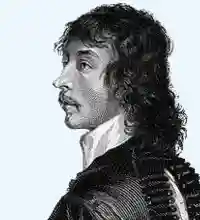
“’Give me more love or more disdain; The torrid or the frozen zone: Bring equal ease unto my pain; The temperate affords me none.” ― Thomas Carew (1595-1640)
The speaker praises the lady of her beauty and splendor. The beauty of a flower is a real happening. It captures the eyes and heart of the beholder. The flower and its beauty are transitory. After posing a question, the speaker immediately states that the flowers, and all their beauty, after fading and withering, return to the lady and become part of her beauty. The lady’s beauty is the cause and the origin from which the beauty of all the flowers emanates.
This stresses on the physical perfection of the lady’s beauty. After this, the speaker makes a sudden jump from Jove to Heaven. The golden particles or atoms of the day have increased the glory of the lady’s hair. It was the larger imaginative conception of the God Himself to make the lady beautiful on earth. The speaker is wonderfully imaginative here. He believes that the heaven has prepared these tiny fragments, those “powders” to make the lady physically perfect. After this, the speaker reflects on the tune of the lady. The nightingale; the summer bird after singing and making the forest and valley replete with its melody returns to the lady. The bird hibernates (spends the winter in a state like deep sleep) in her throat preserving and cherishing (keeping warm) her musical and soothing voice (note). After this the speaker’s mind flashes upward and feels that the ‘falling stars’ come to rest on the lady’s eyes making them mysteriously beautiful, sparkling and flashing. Finally, the lady assumes the status of a Phoenix, the most famous fabulous bird capable of rising again and again after its death. The lady is elevated. This is a conceit, a hyperbole. Like the bird, the lady is capable of renewing her life. She is immortal, and she brings new lives on earth. The speaker tells us that we need not think where the miracle occurs — in the east or the west. He clearly states that the miracle of nature is in the lady herself. The lady herself is the Phoenix. The implication is that the lady is the source from which the whole life on earth springs. Here is the complete dependence of the speaker on her. His life and the future of their progeny entirely depend upon her.
The poem is a fascinating one. Without the use of adjectives and other figures of speech (similes and metaphors) the poet gives the powerful expression of the lady’s beauty and inner quality. The expression like “your Beauties orient deep” underlies the mysteriously fabulous quality and the romantic aspect of the lady’s beauty. The lady appears to us with all her beauty, musicality (nightingale), splendor and mystery (Phoenix).
Another aspect of the poem is its easy, graceful rhythm and the exquisitely shaped stanza pattern. The poem has a regular pattern of rhythm. Each stanza has two pairs of end-rhyming words, and almost all the rhyming words are musical.
The poem is composed in iambic tetrameter (eight syllables with unstressed and stressed syllabic pattern). Each line is divided into two halves: first two lines make an inquiry and the second two lines make a reply. The beautiful pattern of the poem, both in terms of its structure and sound perfectly, matches with the sense (the perfection of the lady’s mysterious beauty). The poem is successful in its beautiful matching of the sense with the sound and pattern.
Critical Analysis
Ask me no more where Jove bestows is a plea to his beloved not to ask the speaker a number of questions that he seemed to have been asking to himself. From a single reading, we can see that the speaker has repeatedly requested her not to ask him certain questions. We can understand the literal meaning of what he is saying quite easily. But, what we wonder about is his intention.
On a closer study of the poem, we realize that he is telling his beloved not to ask those questions because he has now found out their answers; his intention is to “praise” her by attributing all the most beautiful things to her beautiful face, hair, voice, eyes and her heart itself. The poem is a poem of praise (eulogy) of a beloved in an indirect and strongly rhetorical manner.
The speaker’s ideas, develop but the situation remains the same. In fact, there is no real indication of the actual, outward or physical situation when the speaker is speaking. The whole poem is significant only for the typical manner of the expression of the thoughts, and ideas and for the expression of universal feelings of love and admiration of a woman whom a man loves. The speaker begins and ends with the same strategy of telling us ‘not’ to ask him anymore certain questions, implying that it is no longer necessary to ask those questions. The development of ideas consists of mainly a series of questions that the poet no longer wishes to be asked because he can now answer himself, as actually he does. The series of conceits developments with a sense of interconnectedness, and the ending does have an air of finality in terms of ideas; the poet makes us feel as if there is no more to be said.
The speaker is now certain where Jove (god of the Greeks) takes the beauty of the rose when the summer is over. He says that the beauty of the roses go back and lie deep in the ‘oriental’ or eastern beauty of his beloved. He tells us to ask him no more where the golden atoms of the sunlight in the day go at night, because he now knows that the heaven itself enriches her hair with that golden powder. He next requests us not to ask him where the sweet nightingale goes after the spring, because it is now certain that it goes to her sweet voice. He also needs no answer about where the falling stars go, because he is now sure that they come and sit in her eyes that shine so bright. He also now knows for sure that the mysterious Phoenix goes and dies in the nest of her heart. He is explaining categorically the erstwhile mysteries of the nature, and also how and why his beloved is so beautiful. He suggests that he had been puzzled by questions like ‘where the beauty of the rose goes after the spring and summer pass away’: but now he understands that all the beauty of the nature goes into the beauty of his beloved. Rhetorically, he is explaining why his beloved is so beautiful.
Though the simple paraphrase can be so simple, the poem is based on an indirect, rhetorical strategy of emphasizing how beautiful the beloved is and by implication how much the speaker loves her. To understand the force of the poem’s logic and its meaning, we need to interpret the figurative language it has used. To give the description of his beloved a classical note, he begins with a Greco-Roman allusion of Jove, who is there to take the beauty of the rose as it fades and put that into the appearance of a beautiful woman who has fascinated the poet. The beauty of the rose is here poetically compared with that of the beloved, but unlike the typical sonneteers of the Shakespearean era, this poet has put it in a very different way. Now, we should not think that the rose actually goes into the appearance of the woman being talked about. In the special poetic language or in the poetic sense, it is only that the speaker is playing with the speculation (thinking) that his beloved seems to take the beauty of the rose to become so beautiful all the time. The thought is in fact so fanciful and impossible in terms of scientific thought. But we know that the ‘truth’ of the feelings in the context of praising a beloved is compellingly convincing to the reader. Such “imaginative conception involving a witty logic” is called a “conceit”. The poem uses, such conceits in all the stanzas.
In stanzas two to five, the speaker uses the same figurative language of the conceit (striking metaphor) as in the first; all the witty speculations of these stanzas are also imaginative significant. In the second stanza, the poet says that the golden atoms of sunlight become a part of the lady’s hair. This is to suggest his sense of appeal to her beautiful shining hair. But the phrase ‘golden atoms’ is a reference to the medieval science that the sunlight is made of shining particles (that modern science calls ‘photons’). But in saying so, the poet has shifted from the Roman Jove to the Christian ‘heaven’. This Christianizes the issue; he gives his beloved a religious status, as if she is holy, and as if the heaven itself decorates her hair with the golden atoms. The “dividing” throat of the third stanza is also a special term of seventeenth century music, meaning “harmony”. This is suggestive of the ‘harmony’ in the appearance and appeal of the beloved. The ‘stars’ of the fourth stanza are also poetically significant in suggesting the poet’s strong appeal towards the eyes of his beloved. The word ‘sphere’ means the natural element from which things are made (tatwa): he feels that her eyes are naturally the origins of the brightness that she has. The Phoenix of the last stanza seems to explain the ultimate mystery of why and how his beloved is so beautiful. He knew that the Phoenix died every five hundred years and is reborn, but he never knew where it made its nest and went to die. He now knows that it goes to her fragrance (sweet smelling) breast to die and be reborn. She is the miracle of the nature. All the logic is directed at nothing but a flattering commentary on the mysterious beauty of the beloved.
The logical structure of the poem is understandable without much difficulty. The poet has designed his appreciation of his beloved in a series of parallel and emphatic statements followed by requests. In each stanza, he first requests his beloved not to ask him any longer a certain question, which he implies that he used to wonder about himself. Then he tells her the reality, always beginning with the same word “for” which means “because”. This is also the reply of why she should not ask him the question any more. The request and explanation develop in a series of parallel structures, but the idea becomes more and more emphatic each time. The imaginative conception of the idea is original and striking. Each point is a subtle but powerful praise of the beloved’s beauty. Surprisingly, there are not many adjectives or descriptive words; the poet does with logical trick what we would do with bombastic adjectives and other words. The choice of words is worth appreciating. The word ‘orient’ deep in the first stanza suggests the exotic and spectacular beauty of the east (Asia or Africa) which the poets of the west always look at with amazement. It also suggests remoteness, romance, splendor and so on. Similarly, the words ‘golden atoms’, ‘heavens’, ‘Nightingale’, ‘dividing’, ‘sphere’, ‘spicy’, ‘Phoenix’ and ‘fragrant bosom’ give the poem a classical note. The praise is done in grand words and a serious tone.
The rhythm and other musical elements of the poem match the theme of the harmonious appearance and impression of the poet’s beloved. In fact, the regularity of the rhythm, the perfect rhyme-scheme reinforces the theme of harmony and beauty. The poem is written basically in the rhythm of iambic tetrameter. If the iamb gives the poem a serious tone, the tetrameter balance of the beat makes it light-hearted and pleasing. The pauses in the middle of most lines add to the meditative quality of the poem. In short, the beauty and elegance of the technique of the poem so perfectly fit the beauty and elegance of the woman the poet is praising. The eloquence in the expression, the force in its logic, the naturalness and ease in the selection of words, and the lilting rhythm makes us discard out critical stance to detect any fantasy which we notice only on analytically rereading the poem.
The questions that the speaker asks his beloved are of philosophical and poetic significance. That gives the poem its serious tone along with the ‘classical’ treatment of the subject. The speaker seems to have been speculating upon metaphysical and philosophical questions of the pre-scientific times. There are many, references of the medieval (middle age) and ancient issues, myths and learning. Among the many appreciable things in the poem, I was particularly struck by the simplicity of expression, wit and originality of the figurative language, and also by the delight of its easy and graceful rhythm.
Literary Analysis
This song is seventeenth-century English poem and this can be justified from the use of archaic words- whither, do stray, cloth haste, unto etc. It is not difficult to understand that this poem is a song, sung for a beloved by a lover. Introduction of the second person pronoun, and the references to beauty and various human attributes indicate that it is a, “love poem”.
The poem has been addressed to the lady who is likely to demand admiration. In the depth of the meaning, it praises the lady. The speaker speaks to his beloved, expresses his feelings and affection, conveys his unsatisfied longings, flatters her, and ultimately tries to win her favors.
The persona says- “Ask me no more,” as if he had already said everything. He is sure that the hearer (the second person) knows everything and she needs to ask him no more. It is also possible that, as the things are already comprehensive or understandable; the speaker no longer wishes to find answers to these questions. The clause functions here as a refrain, which is usually very significant in a song for emotive expression.
Development of the poem consists mainly of the series of questions and answers. Though he says- “Ask me no more”, ultimately he answers the questions. After interpreting the questions and answers, we come to understand the deep meaning along with the surface meaning. What happens to the lading, or dying rose alter its season of flourishing? All know the answer. This is subject of common sense. What becomes of the beauty of a living thing such as a flower? Of a lady? In fact, beauty remains with all real perfection for a short time, and later disappears mysteriously, but a question arises- where does it go? Our sense would tell us that it finally mixes with the soil. The speaker of the poem goes a little far from that. He knows the answer. All these flowers, and all their beauty, after fading and withering return to you, and become part of your beauty: indeed, your beauty is the ’cause’ or origin from which they have sprung in the first place. Thus, he speaks contrary to common sense. His idea will be accepted if you are a reference to the nature, All would agree that this beauty returns to the nature, but if he intends to refer to the beloved, his idea will be only a fancy. It is obvious, that he is not really trying to, describe for us the exact phenomena of the world of reality: his mind is “playing with” ideas and speculations, in a fanciful, even fantastic way, with the object not of conveying to us the factual truth of a situation, but the truth (or urgency) of a feeling. We should not take the factual basis of the poem too seriously, or too literally, but rather fantastic, figurative or literary meaning should be grasped.
The beauty of the rose is the beauty of the lady; therefore, like the ‘orient’, suggesting the East, exotic far-away lands of romance and splendor, the sunrise, the orient pearl, etc., the deeper beauty of the rose has been established in the beauty of the lady. The roses are originated out of the lady’s beauty.
There is a jump in introducing Jove and heaven in the first two paragraphs. It’s Jove, king of gods in Roman mythology, who bestows the beauty to her and also to the flowers. The golden atoms of the day, or the rays of the light, have been originated and prepared by the heaven, or Jove, to enrich her hair. It is also possible that the speaker praises the lady’ hair, which is golden caused by the golden sunrays.
The Melody of the nightingale can be heard during May, but when the month is past, the bird with her song resides in the lady’s throat and keeps her note warm.
Those stars’ light that fall downwards in the dead of night are found set in the lady’s eyes. They are fixed in the eyes’ sphere. The reference to the falling stars is for meteors that are supposed to be set in the shining eyes of the lady.
The Phoenix is a legendary Arabian bird, which is the symbol of life. It is well known for its mysterious birth and death. It is said that only one bird existed, and a new one was born from the ashes of the, previous one. This mystery has been found in the lady’s fragrant (sweet smelling) booms. The bird builds her spicy nest, neither in the east nor in the west. (e.g. Eastern, or, western parts of the world), but in her bosom.
Jove, heaven, and Phoenix are mythological references. Golden atoms of the day and falling stars are scientific and natural references, but used figuratively for dyeing the hair of the lady and for shining light of the eyes of the lady respectively. Rose and nightingale are creatures of nature that signify beauty and sweet voice of the lady. So far the lady concerns, different parts of her body have been elaborated, highlighted elevated, and also exaggerated. Her body, hair, voice, eyes, and heart have been described beautifully, with the series of allusions and comparisons.
The Charm of the poem along with the spellbinding charm of the lady has been added with the use of the regular pattern of rhythm and the correspondence of sound which is one of the ancient, traditional pleasures of poetry. Each stanza closely matches the general pattern: each contains two pairs of end-rhyming words which are full and sonorous: we notice that almost all the rhyming words are based not on sharp short vowel sounds, but, sustained and resounding, on the extended English diphthongs: bestow/rose , prepare/hair, throat/note, etc. Each line of the poem contains eight syllables with four stresses, and the basic pattern is iambic, each line divides into two halves at almost exactly the same place. The metrical pattern underlies and serves the natural colloquial stresses of the poet’s voice.